Melbourne Concrete Services
Melbourne Concrete Removal
Break up and remove unwanted concrete with the surrounding home, services, access and disposal route carefully protected.
Project Overview
Concrete Removal Melbourne
Break up and remove unwanted concrete with the surrounding home, services, access and disposal route carefully protected.
Old, damaged, or unwanted concrete needs to be removed properly — not just broken up and left behind. Our concrete removal Melbourne team handles the full process, from breaking and lifting to complete site clean-up, for residential and commercial properties.
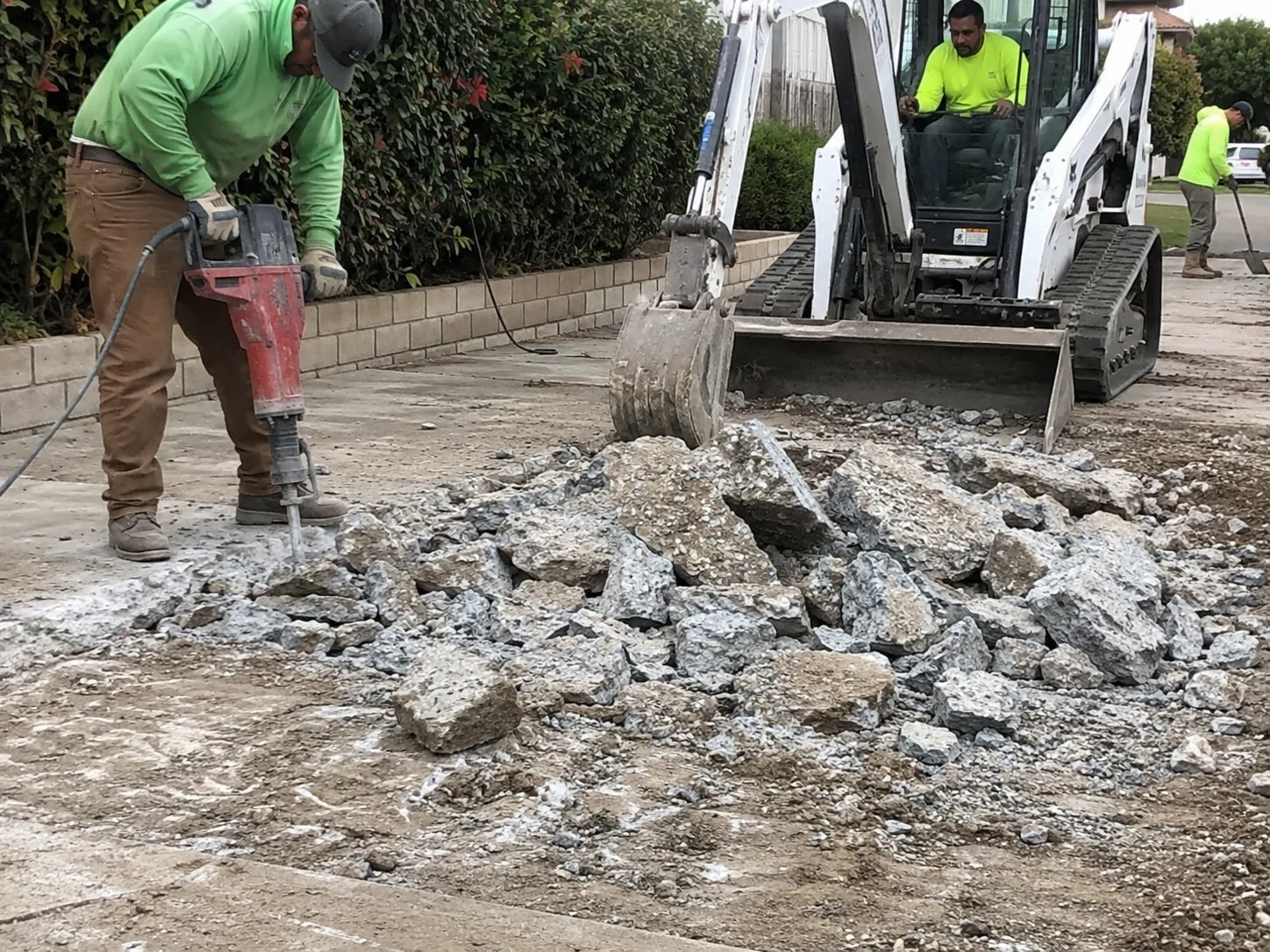
Whether you're removing a cracked driveway, old slab, or unwanted concrete structure, our crew uses the right equipment to get the job done efficiently without damaging surrounding areas. We assess each site beforehand to plan for access, disposal, and any underlying services that need to be protected.
From small residential jobs to larger commercial removal projects, we handle the heavy lifting so you don't have to. Once the concrete is gone, we leave your site clean and ready for the next stage of your project.
Trust our team for concrete removal done safely and properly.
The Process
Removing Old Concrete Safely: The Process
Before anything gets broken up, we work out what is actually in the slab and what is underneath it. Thickness, reinforcement mesh, embedded posts and the location of water, gas, power and stormwater services all change how we approach the job, and getting that wrong is expensive. We also agree the exact demolition boundary with you, particularly where the concrete runs up to a garage, a footpath, a retaining wall or a neighbour.
From there the work is methodical. We saw-cut clean edges where the slab needs to stay put on one side, break the concrete down into liftable sections, and use the smallest machine that will do the job properly. Tight side-access blocks sometimes mean hand tools and barrowing instead, which takes longer but avoids damage to fences, gardens and paths. Walls, downpipes and landscaping get protected before the breaking starts, not after.
The rubble is then loaded out and taken away, with clean concrete sent for recycling wherever we can. What we leave behind depends on what happens next: a rough graded surface if you are landscaping, or a properly prepared and compacted base if we are pouring new concrete for you. Either way the site gets swept and checked before we call it finished.
- Service location and demolition boundary
- Machine, hand-tool and truck access
- Protection of walls, fences and gardens
- Rubble handling and final site condition
Approvals
Permits for Concrete Removal and Demolition in Melbourne
Most straightforward residential removals, such as taking out a back patio, a shed slab or an old path inside your own boundary, do not require council approval. Where approvals usually do come into play is at the front of the property: work that affects the driveway crossover, the footpath or anything else in the road reserve generally needs consent from your local council, which across the suburbs we work in is usually Stonnington or Boroondara, before it starts, and that applies to removal just as much as to a new pour.
A few other situations are worth checking early. Units and townhouses normally need owners corporation approval. Concrete removal that involves structural elements, or that sits alongside a larger demolition, can trigger separate requirements. Older properties are the other one to watch, and there are plenty of them here, because materials used around slabs and sheds before the 1990s can contain asbestos, which has to be identified and handled by a licensed removalist rather than disturbed on site.
Requirements change with the property and the scope, so treat the above as general orientation rather than a ruling. We will tell you what we think applies to your job at quote stage and point you to what needs confirming with your council, so nothing gets discovered halfway through the demolition.
Working With Us
Why Choose Our Concrete Removal Contractors in Melbourne
Removal looks like the crude part of a concrete project, but it is usually where the avoidable damage happens. Cut a service, undermine a retaining wall or crack the path next door and you have a much bigger problem than the slab you came to take out. Our crews are licensed and insured, they do this work regularly rather than occasionally, and they plan the sequence before the breaker comes off the truck.
Careful removal also tells you something useful. Once the slab is up we can usually see why it failed in the first place, whether that was poor base preparation, water tracking under the concrete or reactive ground movement. If we are pouring the replacement, that information goes straight into how we prepare the new slab, so you are not repeating the same problem in a few years.
Practically, you get a fixed price, a clear start date, tidy work and rubble that actually leaves the property. If removal is only the first stage of a larger driveway, slab or landscaping project, we can carry it straight through into the new pour so you are dealing with one team rather than coordinating several.
Project Cost
Concrete Removal Cost in Melbourne
Concrete removal costs depend on the size and thickness of the slab, site access and how the material is disposed of. As a general guide, removal typically ranges from around $40-$80 per square metre, with larger areas often costing less per square metre than small, isolated sections due to setup and equipment mobilisation.
Additional factors that can affect price include reinforcement mesh within the slab, proximity to structures or fences, and whether machinery access is limited, all of which can increase labour time. Disposal fees also vary depending on the volume of concrete removed and local tip charges.
Every property differs in access and existing conditions, so these figures are a general guide only. A site assessment and quote will provide accurate pricing tailored to your specific removal project.
Discuss concrete removal in Melbourne
Send the project location, approximate size, current surface and finish you are considering.